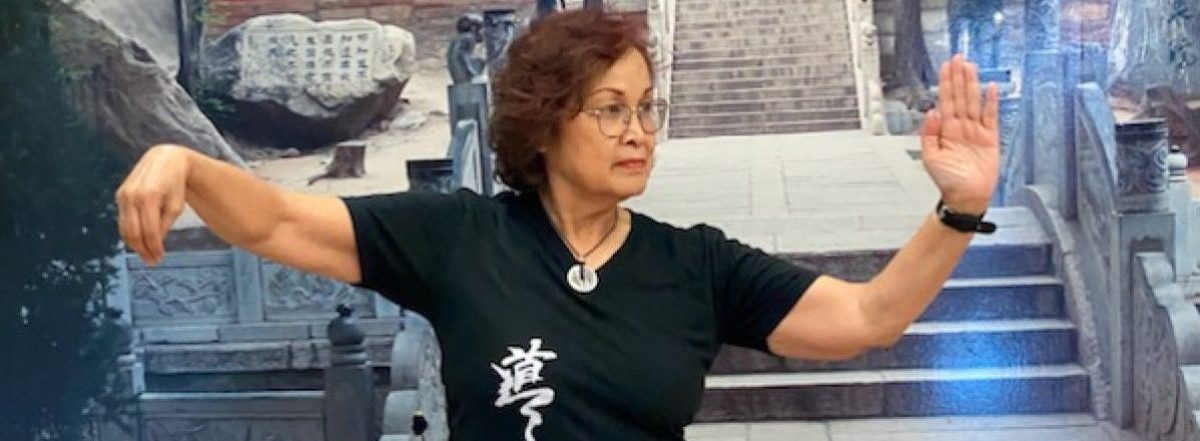
Tai chi and Chair Yoga teach us about ourselves through three aspects—Jing, Chi (qi), and Shen, known as the three treasures. The physical form involves how we move. Our bodies may not be ready for challenging yoga poses, but with intention, we progress slowly, building strength over time. Eventually, we can lift our arms longer and stand up from a chair 15 times with ease and greater flexibility.
Life is a daily practice of relating to the three treasures. When I sit upright and steady (jing), I can focus on deep breathing and visualize energy (qi) moving through my body—rising from the earth into my feet, up to my knees, lower back and spine, over my head, through my shoulders and elbows, and out through my fingertips. Learning to guide energy with intention takes time, even though energy is always in motion.
To move energy through my body, I visualize my breath and direct it with intention—sending vital energy where it’s needed most. I guide it along my meridians to support specific organs or to areas that feel injured or painful. Like any new practice, it takes time to learn. If I want to live as fully as possible, learning to energize and heal my body makes perfect sense.
As I guide energy through my body, the emotions I allow also move with it. I choose the emotions I carry—positive or negative—and I can trade what harms me for what supports my well-being. It’s my responsibility to care for my body and to shape my life to live my purpose—the why behind what I do.
I often use a lemon as an analogy. Imagine holding a big yellow lemon—feel the smooth peel, smell it, peel it, and take a bite. Just thinking about it can make your mouth water. That’s the point: thoughts and imagination can create real physical reactions. This skill isn’t reserved for a few people; anyone can learn to move energy through the body, and with practice some become adept at using it to support healing for themselves and others. It’s like a “thought muscle”: everyone has it, but training strengthens it—just as runners build their leg muscles.
In the same way, meditation—whether seated, standing, or in motion—strengthens the mind like a muscle, building calm, clarity, and focus that translate into healthier mind and body.
We’ve explored jing (physical form) and chi (qi) (energy). Now I turn to the third treasure, shen—the life force and, in a way, the most humble of the three. Through stability, I bring together what I do and who I am with why I do it. In its humility, shen guides me toward service—to do, give, and share—so I can show up as my best self, with flexibility in how I act.
Stability in my body, mind, and spirit helps me build strength and wisdom to stay balanced and, over time, become more flexible and focused in my choices and actions.


