Featured

deb gomez

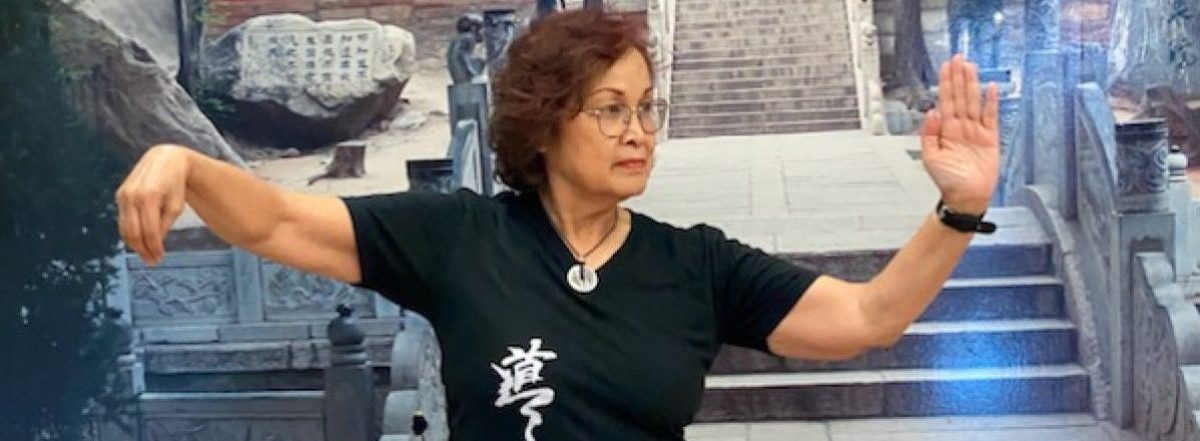
Deb Gomez, a Medical Qigong Certified Instructor, teaches the fundamentals of qigong and tai chi. She also teaches chair yoga to the senior population in the Phoenix area. Her goal is to share the knowledge and practice with anyone seeking to live a healthier lifestyle physically, mentally and spiritually. Deb’s students learn deep, proper breathing techniques, body alignment to improve their posture and basic tai chi steps to achieve better balance and flexibility. The ancient practices of qigong, tai chi and yoga promote a clearer mind, relaxation and a wholesome, healthy lifestyle.

Deb dedicates herself to continual training and research into her craft, especially in teaching the fundamentals of qigong and tai chi with regards to the five elements of Traditional Chinese Medicine (TCM). Her instructions are easy to follow, and her classes are fun!

Affirmations and TCM

Affirmations are intentional statements we speak to influence our mindset and actions. When said with sincerity and conviction, they clarify what we want, reinforce our values, and help us move toward our goals.

Spoken affirmations are clear, specific statements—not wishful thinking. Repeating them daily helps embed them in the subconscious; over time, we start living as if they are true, and our actions follow.

Traditional Chinese Medicine (TCM) also supports the use of affirmations. Practices like meditation and qigong combine breath and intention through affirmation to help move qi through the meridians, the body’s energy pathways.

Another approach, sometimes called “acu-affirmations,” pairs acupressure with affirmations: you apply gentle pressure to specific meridian points while speaking an affirmation. For example, massaging ST36 (Stomach 36)—a point below the kneecap on the outer lower leg—is commonly used in TCM to support energy, immune function, and digestion. While pressing the point, you might say, “I am energized,” or “I am healthy,” as part of a wellness routine.

How do we create affirmations? Choose statements that are specific and say them as if they are already true. For example, instead of “I exercise so I can be stronger,” say, “I am strong.” Instead of “I am getting healthier,” say with conviction, “I am healthy.”

Knowledge of the Five Elements (Wood, Fire, Earth, Metal, and Water) along with affirmations can greatly benefit our health. Each element is linked to particular organs and emotions. Our organs’ health depends on what we eat and how we feel.

For example, our kidneys hold the emotion of fear. We can rub our kidneys, or move our hands over the kidney meridian, or even sit in meditation and visualize the energy flowing through the kidney meridian and saying, “I am secure and safe.”  Or, or a healthy kidney, we say, “My kidneys are healthy,” and visualize and “see” strong healthy kidneys.

Our liver holds the anger emotion, so we can place our hand on our liver to rub it gently, or move our hands following the liver meridian, or meditate and see the flow of energy moving over the meridian and heal the liver saying, “I am calm.  I am patient.”

Pairing affirmations with our TCM practice make sense. They are a powerful partnership because they reinforce positive possibilities in our conscious and subconscious minds. When we say affirmations aloud two to three times a day and trust the process—we become what we repeatedly believe and declare.

               I am strong. I am well. I am beautiful. I am healthy. I am kind and loving.

Finding Mental Clarity and Peace Through Meditation

Our mind is often cluttered by distractions coming from every direction—phones buzzing with constant updates, 24-hour TV news, and around-the-clock sports coverage.

Racing thoughts can overwhelm us, fueling stress and anxiety. We may feel drained, weak, distracted, and unmotivated. Without a daily pause to reset, the pattern can persist and erode our well-being and peace of mind.

We often refer to the “monkey mind” because we know how hard it can be to calm and clear our thoughts. Meditation is one of the most effective ways to create mental space and think more clearly. Each morning, sit quietly for 10–15 minutes. If possible, choose a consistent, quiet spot. If not, sit comfortably with your eyes slightly open, letting in a thin sliver of light.

Sit comfortably and bring your attention to your breath. As you inhale, let your abdomen expand; as you exhale, gently draw your navel toward your spine. Continue slowly, feeling your belly rise on the inhale and fall on the exhale. Yes—this is intentional: breathe in by expanding your abdomen like a balloon, and breathe out by drawing it in.

Take slow, steady breaths and focus on your abdomen as it rises and falls. This deep breathing can reduce stress and quiet the mind, creating a sense of “space.” Chogyal Rinpoche—a spiritual leader, meditation master, and humanitarian—says, “During meditation a space is created within the subconscious mind: say 20%.” He adds that space is “…mindfulness, that space itself is compassion for others, that space itself is wisdom.”

Meditation deepens our understanding, clarifies our beliefs, and strengthens critical thinking. When we don’t make time and space to think, we lose opportunities for self-reflection and hinder intellectual growth. Quiet moments also improve focus and concentration—skills essential for making sound decisions.

Mr. Rinpoche also says that “Meditation gives the mind the space it needs to (re)discover the natural balance, goodness, and discernment that have always been there for the asking.” In today’s world, we pay close attention to what we eat and drink and how food affects our bodies. With the constant stream of technology and information, we should be just as mindful of what we feed our minds—because our thoughts alone can increase stress in the body. Now more than ever, it’s important to practice meditation to clear the mind.

Tai chi and yoga are forms of moving meditation that help you create the mental space needed to stay centered, supporting clarity and peace of mind.

Whether you’re seated or moving, breathe slowly and deeply. Notice the “space” between your thoughts—and let it bring you peace.        

Finding Your Center

Practicing yoga or martial arts can help you feel centered and grounded. Being centered is more than physical balance; it’s mental and emotional steadiness. As you cultivate that inner balance, you often experience greater peace and calm.

The goal isn’t just peace and calm—it’s also learning to stay grounded: noticing the energy (qi) within and around you, remaining “rooted,” and keeping your attention on the present moment.

Daily life is full of distractions—ads urging us to buy, news competing for attention, bright billboards, and phones constantly buzzing with alerts and “limited-time” offers. All day, we’re pulled in different directions and react automatically to traffic lights, alarm clocks, calls, bills, health needs, and family demands. By bedtime, it’s no wonder we feel exhausted and wonder why our to‑do list is still unfinished.

When we feel grounded and centered, we’re better able to direct our lives. Instead of being pulled by every distraction, we stay on our agenda—blocking disturbances, setting priorities, and completing tasks one by one with less anxiety. We move through the day with intention, supporting our nervous system, brain, and overall health. We also become more aware of imbalances that can lead to stress, anxiety, or illness.

Practicing chair yoga and tai chi each day helps us feel more centered and grounded. Stress and anxiety affect our energy, but we can support healthier brain chemistry—serotonin, dopamine, endorphins, and oxytocin—which boosts well‑being and helps reduce depression and anxiety. As we do tai chi and chair yoga, our brains naturally release these feel‑good chemicals.

Keep going—relax, stay calm, and stay focused. You’re doing great!

Journey Around the Sun–and the Five Elements

Earth and all its inhabitants complete a 365-day journey around the sun each year. Over centuries, ancient wise men observed this annual cycle and recorded nature’s changes in plants, animals, weather, and human life. Generation after generation documented the seasonal patterns and how they shaped human behavior—from health and survival to major life decisions. They concluded that five elements of nature influence people, not only in their time but in ours as well.

This sacred knowledge was preserved and practiced for generations, often kept secret. It was reserved for holy men and women who were believed to “do miracles” to heal and guide their communities. History, cultural stories, and folklore describe these privileged healers—often called wise men and women—as strong, healthy people known for special wisdom. The “secret information” was passed down carefully from one generation to the next.

As people traveled more widely, sharing knowledge—especially about health and healing—became inevitable. Soon, “healing networks” formed, bringing eastern healers and western doctors together to compare practices. That exchange continues today, and our understanding of health and medicine keeps evolving.

All medical traditions—ancient, eastern, and western—aim for the same goal: a person’s health and well-being, even though they arise from different philosophies. Western medicine draws heavily on the ancient Greeks’ scientific approach, using evidence-based diagnosis focused on the physical body and its symptoms, followed by “clinically proven” treatments.

In contrast, eastern medicine has been practiced across Asia for thousands of years, drawing largely from traditions in China and India. Its focus is treating the “whole person,” not just symptoms. In Chinese medicine, health depends on balancing energy that moves through the body along “invisible highways” called meridians. Today, acupuncturists around the world use this 2,000-year-old practice, placing needles along meridians to release or add energy to support specific organs, often alongside herbal medicine and remedial massage to restore balance.

Journey Around the Sun Qigong and Tai Chi programs, including chair yoga, draw from both eastern and western approaches to health and well-being—and I’m proud of that, because it works. For example, one of my American Indian doctors practices western medicine with a focus on kidney health, while another is my acupuncturist, placing needles along my meridians to release, add, or redirect energy as needed. My general practitioner (GP) is American, and all three doctors share my test results and health information. Each of them supports my tai chi, qigong, and yoga practice, along with vitamins and any medication I need for my best overall health. I’m grateful for their care and for the flow of information between them.

With this foundation on the origins of eastern and western medicine—and how they relate to tai chi and yoga—I’m ready to introduce the FIVE ELEMENTS of nature and how they influence our health (mind, body, and spirit) over TIME—through the seasons of the year and throughout our lifetime, often called the “seasons of our life.”

The five elements are WOOD (spring), FIRE (early summer), EARTH (late summer), METAL (fall), and WATER (winter). Although they align with the four familiar seasons, this model adds a fifth: late summer. In the West, we sometimes call it “Indian summer.” Here are two common definitions:

  • An unusually warm, dry spell in late autumn.
  • A late-in-life period of renewed happiness or success.

I’m writing this treatise in May, early summer—the season of FIRE—so we’ll begin our closer look at the five elements with Fire.
Stability First–Then Flexibility

Tai chi and Chair Yoga teach us about ourselves through three aspects—Jing, Chi (qi), and Shen, known as the three treasures. The physical form involves how we move. Our bodies may not be ready for challenging yoga poses, but with intention, we progress slowly, building strength over time. Eventually, we can lift our arms longer and stand up from a chair 15 times with ease and greater flexibility.

Life is a daily practice of relating to the three treasures. When I sit upright and steady (jing), I can focus on deep breathing and visualize energy (qi) moving through my body—rising from the earth into my feet, up to my knees, lower back and spine, over my head, through my shoulders and elbows, and out through my fingertips. Learning to guide energy with intention takes time, even though energy is always in motion.

To move energy through my body, I visualize my breath and direct it with intention—sending vital energy where it’s needed most. I guide it along my meridians to support specific organs or to areas that feel injured or painful. Like any new practice, it takes time to learn. If I want to live as fully as possible, learning to energize and heal my body makes perfect sense.

As I guide energy through my body, the emotions I allow also move with it. I choose the emotions I carry—positive or negative—and I can trade what harms me for what supports my well-being. It’s my responsibility to care for my body and to shape my life to live my purpose—the why behind what I do.

I often use a lemon as an analogy. Imagine holding a big yellow lemon—feel the smooth peel, smell it, peel it, and take a bite. Just thinking about it can make your mouth water. That’s the point: thoughts and imagination can create real physical reactions. This skill isn’t reserved for a few people; anyone can learn to move energy through the body, and with practice some become adept at using it to support healing for themselves and others. It’s like a “thought muscle”: everyone has it, but training strengthens it—just as runners build their leg muscles.

In the same way, meditation—whether seated, standing, or in motion—strengthens the mind like a muscle, building calm, clarity, and focus that translate into healthier mind and body.

We’ve explored jing (physical form) and chi (qi) (energy). Now I turn to the third treasure, shen—the life force and, in a way, the most humble of the three. Through stability, I bring together what I do and who I am with why I do it. In its humility, shen guides me toward service—to do, give, and share—so I can show up as my best self, with flexibility in how I act.

Stability in my body, mind, and spirit helps me build strength and wisdom to stay balanced and, over time, become more flexible and focused in my choices and actions.

Tai Chi and Yoga: Ancient Practices for Modern Life

Tai Chi and yoga are ancient health practices that originated in different countries. Both cultivate harmony of mind, body, and spirit, helping ease stress and anxiety from daily demands and from the wear and tear of aging.

Tai Chi and yoga are both mind-body-spirit practices. Tai Chi is also considered a martial art because some movements can be used for self-defense. Performed slowly, these same movements stretch muscles, support alignment, and strengthen breath control. The bent-knee, flowing sequences build strength, flexibility, and balance, while steady deep breathing supports overall physical and mental health.

Yoga isn’t considered a martial art, but it also emphasizes meditation and breath as you stretch and hold poses. It’s often simplified as “Tai Chi is movement, and yoga is stretching,” yet both practices blend motion and stillness. Tai Chi includes many held postures to engage muscles—especially when working with the eight vessels—to generate and store energy throughout the body. Likewise, yoga often links poses through slow, deliberate transitions, such as a “yoga flow,” coordinating each movement with an inhale or exhale and brief holds before moving on.

As a certified Chair Yoga, Qigong, and Tai Chi instructor, I encourage students to practice both for overall well-being—physical, mental, emotional, and spiritual. You don’t need to be in peak condition to begin; these practices can help anyone, at any age, find balance and enjoy lasting health. My only caution is to listen to your body and do what you can today. Over time, gradually increase your movement, stretching range, and how long you hold poses. With daily practice, you’ll notice steady gains in strength and flexibility, better posture, and a clearer sense of what your body needs.

As you practice Tai Chi and yoga, start by focusing on your breath. Move slowly and with intention as you transition from one pose or stance to the next. Imagine energy flowing through your body. We’ll explore visualization more as we continue practicing.

Tai Chi and yoga are popular today because many of us are looking for better health, relaxation, and balance.

Thanks for making time for your well-being—join us!