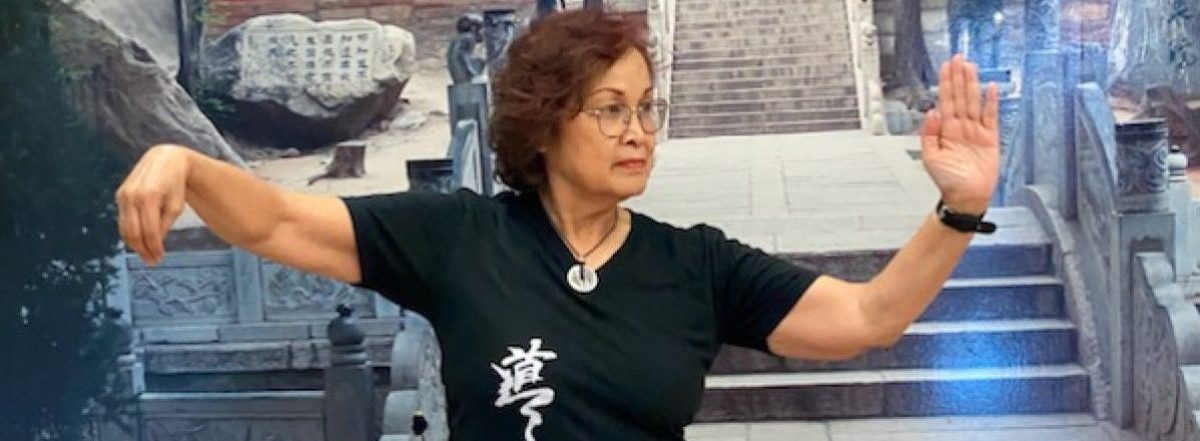
Finding Your Center

Practicing yoga or martial arts can help you feel centered and grounded. Being centered is more than physical balance; it’s mental and emotional steadiness. As you cultivate that inner balance, you often experience greater peace and calm.

The goal isn’t just peace and calm—it’s also learning to stay grounded: noticing the energy (qi) within and around you, remaining “rooted,” and keeping your attention on the present moment.

Daily life is full of distractions—ads urging us to buy, news competing for attention, bright billboards, and phones constantly buzzing with alerts and “limited-time” offers. All day, we’re pulled in different directions and react automatically to traffic lights, alarm clocks, calls, bills, health needs, and family demands. By bedtime, it’s no wonder we feel exhausted and wonder why our to‑do list is still unfinished.

When we feel grounded and centered, we’re better able to direct our lives. Instead of being pulled by every distraction, we stay on our agenda—blocking disturbances, setting priorities, and completing tasks one by one with less anxiety. We move through the day with intention, supporting our nervous system, brain, and overall health. We also become more aware of imbalances that can lead to stress, anxiety, or illness.

Practicing chair yoga and tai chi each day helps us feel more centered and grounded. Stress and anxiety affect our energy, but we can support healthier brain chemistry—serotonin, dopamine, endorphins, and oxytocin—which boosts well‑being and helps reduce depression and anxiety. As we do tai chi and chair yoga, our brains naturally release these feel‑good chemicals.

Keep going—relax, stay calm, and stay focused. You’re doing great!

Tai Chi and Yoga: Ancient Practices for Modern Life

Tai Chi and yoga are ancient health practices that originated in different countries. Both cultivate harmony of mind, body, and spirit, helping ease stress and anxiety from daily demands and from the wear and tear of aging.

Tai Chi and yoga are both mind-body-spirit practices. Tai Chi is also considered a martial art because some movements can be used for self-defense. Performed slowly, these same movements stretch muscles, support alignment, and strengthen breath control. The bent-knee, flowing sequences build strength, flexibility, and balance, while steady deep breathing supports overall physical and mental health.

Yoga isn’t considered a martial art, but it also emphasizes meditation and breath as you stretch and hold poses. It’s often simplified as “Tai Chi is movement, and yoga is stretching,” yet both practices blend motion and stillness. Tai Chi includes many held postures to engage muscles—especially when working with the eight vessels—to generate and store energy throughout the body. Likewise, yoga often links poses through slow, deliberate transitions, such as a “yoga flow,” coordinating each movement with an inhale or exhale and brief holds before moving on.

As a certified Chair Yoga, Qigong, and Tai Chi instructor, I encourage students to practice both for overall well-being—physical, mental, emotional, and spiritual. You don’t need to be in peak condition to begin; these practices can help anyone, at any age, find balance and enjoy lasting health. My only caution is to listen to your body and do what you can today. Over time, gradually increase your movement, stretching range, and how long you hold poses. With daily practice, you’ll notice steady gains in strength and flexibility, better posture, and a clearer sense of what your body needs.

As you practice Tai Chi and yoga, start by focusing on your breath. Move slowly and with intention as you transition from one pose or stance to the next. Imagine energy flowing through your body. We’ll explore visualization more as we continue practicing.

Tai Chi and yoga are popular today because many of us are looking for better health, relaxation, and balance.

Thanks for making time for your well-being—join us!