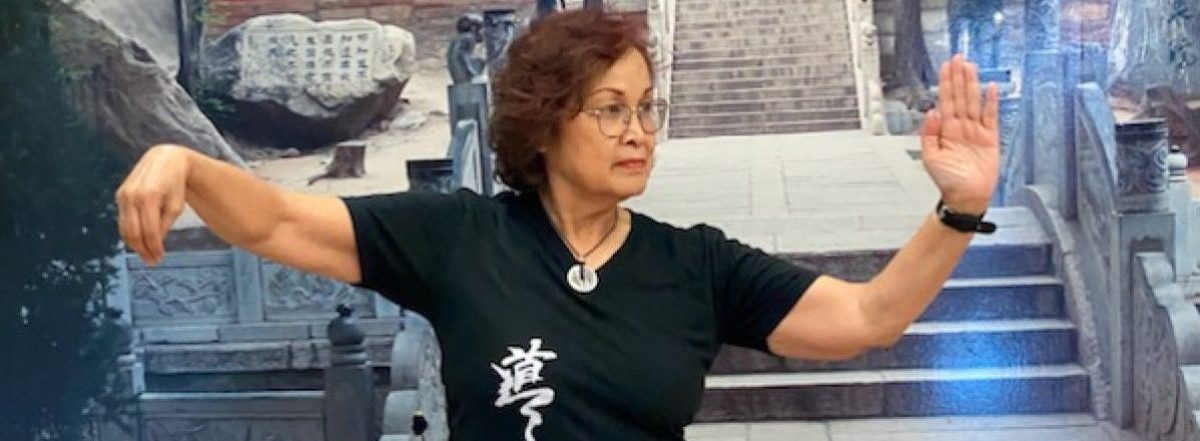
Affirmations and TCM

Affirmations are intentional statements we speak to influence our mindset and actions. When said with sincerity and conviction, they clarify what we want, reinforce our values, and help us move toward our goals.

Spoken affirmations are clear, specific statements—not wishful thinking. Repeating them daily helps embed them in the subconscious; over time, we start living as if they are true, and our actions follow.

Traditional Chinese Medicine (TCM) also supports the use of affirmations. Practices like meditation and qigong combine breath and intention through affirmation to help move qi through the meridians, the body’s energy pathways.

Another approach, sometimes called “acu-affirmations,” pairs acupressure with affirmations: you apply gentle pressure to specific meridian points while speaking an affirmation. For example, massaging ST36 (Stomach 36)—a point below the kneecap on the outer lower leg—is commonly used in TCM to support energy, immune function, and digestion. While pressing the point, you might say, “I am energized,” or “I am healthy,” as part of a wellness routine.

How do we create affirmations? Choose statements that are specific and say them as if they are already true. For example, instead of “I exercise so I can be stronger,” say, “I am strong.” Instead of “I am getting healthier,” say with conviction, “I am healthy.”

Knowledge of the Five Elements (Wood, Fire, Earth, Metal, and Water) along with affirmations can greatly benefit our health. Each element is linked to particular organs and emotions. Our organs’ health depends on what we eat and how we feel.

For example, our kidneys hold the emotion of fear. We can rub our kidneys, or move our hands over the kidney meridian, or even sit in meditation and visualize the energy flowing through the kidney meridian and saying, “I am secure and safe.”  Or, or a healthy kidney, we say, “My kidneys are healthy,” and visualize and “see” strong healthy kidneys.

Our liver holds the anger emotion, so we can place our hand on our liver to rub it gently, or move our hands following the liver meridian, or meditate and see the flow of energy moving over the meridian and heal the liver saying, “I am calm.  I am patient.”

Pairing affirmations with our TCM practice make sense. They are a powerful partnership because they reinforce positive possibilities in our conscious and subconscious minds. When we say affirmations aloud two to three times a day and trust the process—we become what we repeatedly believe and declare.

               I am strong. I am well. I am beautiful. I am healthy. I am kind and loving.

Stability First–Then Flexibility

Tai chi and Chair Yoga teach us about ourselves through three aspects—Jing, Chi (qi), and Shen, known as the three treasures. The physical form involves how we move. Our bodies may not be ready for challenging yoga poses, but with intention, we progress slowly, building strength over time. Eventually, we can lift our arms longer and stand up from a chair 15 times with ease and greater flexibility.

Life is a daily practice of relating to the three treasures. When I sit upright and steady (jing), I can focus on deep breathing and visualize energy (qi) moving through my body—rising from the earth into my feet, up to my knees, lower back and spine, over my head, through my shoulders and elbows, and out through my fingertips. Learning to guide energy with intention takes time, even though energy is always in motion.

To move energy through my body, I visualize my breath and direct it with intention—sending vital energy where it’s needed most. I guide it along my meridians to support specific organs or to areas that feel injured or painful. Like any new practice, it takes time to learn. If I want to live as fully as possible, learning to energize and heal my body makes perfect sense.

As I guide energy through my body, the emotions I allow also move with it. I choose the emotions I carry—positive or negative—and I can trade what harms me for what supports my well-being. It’s my responsibility to care for my body and to shape my life to live my purpose—the why behind what I do.

I often use a lemon as an analogy. Imagine holding a big yellow lemon—feel the smooth peel, smell it, peel it, and take a bite. Just thinking about it can make your mouth water. That’s the point: thoughts and imagination can create real physical reactions. This skill isn’t reserved for a few people; anyone can learn to move energy through the body, and with practice some become adept at using it to support healing for themselves and others. It’s like a “thought muscle”: everyone has it, but training strengthens it—just as runners build their leg muscles.

In the same way, meditation—whether seated, standing, or in motion—strengthens the mind like a muscle, building calm, clarity, and focus that translate into healthier mind and body.

We’ve explored jing (physical form) and chi (qi) (energy). Now I turn to the third treasure, shen—the life force and, in a way, the most humble of the three. Through stability, I bring together what I do and who I am with why I do it. In its humility, shen guides me toward service—to do, give, and share—so I can show up as my best self, with flexibility in how I act.

Stability in my body, mind, and spirit helps me build strength and wisdom to stay balanced and, over time, become more flexible and focused in my choices and actions.

Tai Chi and Yoga: Ancient Practices for Modern Life

Tai Chi and yoga are ancient health practices that originated in different countries. Both cultivate harmony of mind, body, and spirit, helping ease stress and anxiety from daily demands and from the wear and tear of aging.

Tai Chi and yoga are both mind-body-spirit practices. Tai Chi is also considered a martial art because some movements can be used for self-defense. Performed slowly, these same movements stretch muscles, support alignment, and strengthen breath control. The bent-knee, flowing sequences build strength, flexibility, and balance, while steady deep breathing supports overall physical and mental health.

Yoga isn’t considered a martial art, but it also emphasizes meditation and breath as you stretch and hold poses. It’s often simplified as “Tai Chi is movement, and yoga is stretching,” yet both practices blend motion and stillness. Tai Chi includes many held postures to engage muscles—especially when working with the eight vessels—to generate and store energy throughout the body. Likewise, yoga often links poses through slow, deliberate transitions, such as a “yoga flow,” coordinating each movement with an inhale or exhale and brief holds before moving on.

As a certified Chair Yoga, Qigong, and Tai Chi instructor, I encourage students to practice both for overall well-being—physical, mental, emotional, and spiritual. You don’t need to be in peak condition to begin; these practices can help anyone, at any age, find balance and enjoy lasting health. My only caution is to listen to your body and do what you can today. Over time, gradually increase your movement, stretching range, and how long you hold poses. With daily practice, you’ll notice steady gains in strength and flexibility, better posture, and a clearer sense of what your body needs.

As you practice Tai Chi and yoga, start by focusing on your breath. Move slowly and with intention as you transition from one pose or stance to the next. Imagine energy flowing through your body. We’ll explore visualization more as we continue practicing.

Tai Chi and yoga are popular today because many of us are looking for better health, relaxation, and balance.

Thanks for making time for your well-being—join us!